Photography is the art, application, and practice of creating durable images by recording light electronically by means of an image sensor.
A camera lens takes all the light rays bouncing around and uses glass to redirect them to a single point, creating a sharp image. When those light rays meet back together on a digital camera sensor or a piece of film, they create a sharp image.
As a photograph totally depends upon the amount of light entering the camera, it becomes necessary to learn how to control this amount.
Light can be controlled in mainly three ways:
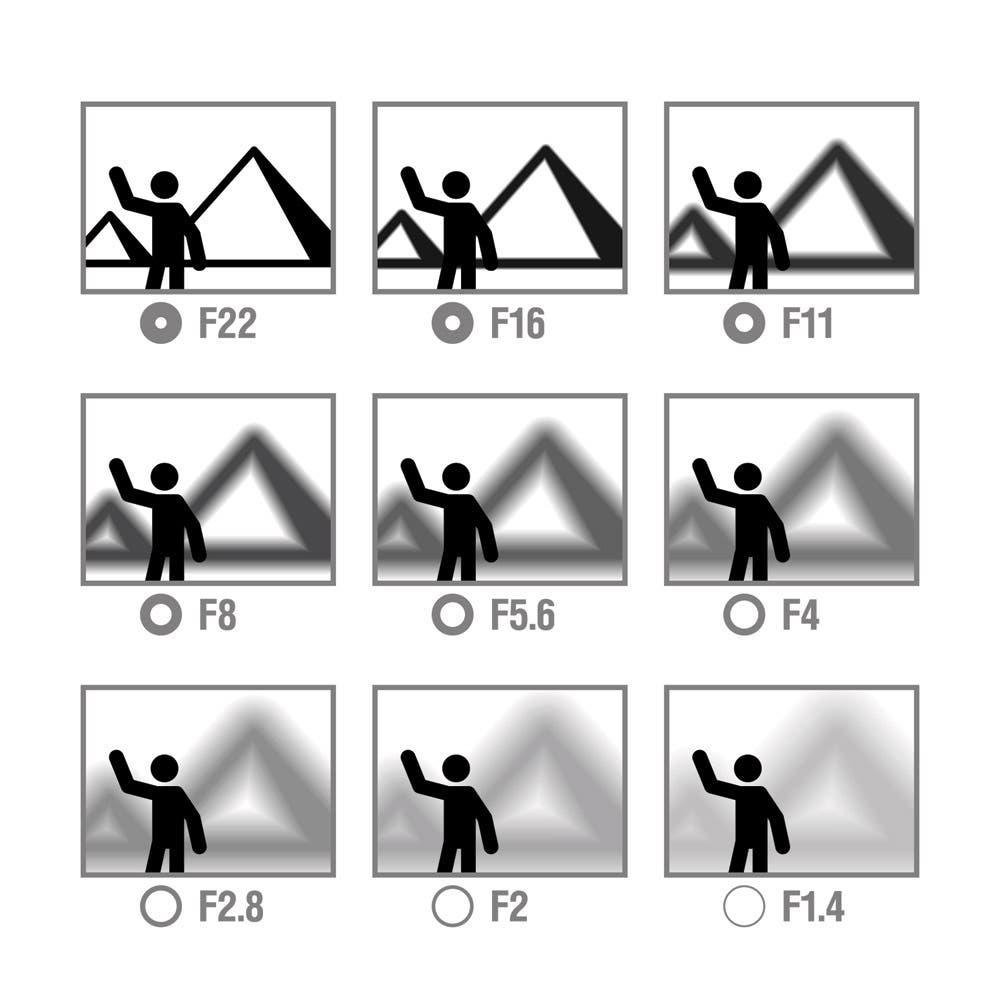
Aperture can be defined as the opening of the lens through which light is entering the lens. The extent of the aperture decides the amount of light when the camera shutter is opened once. It is also called the f-stop value ****of the lens. It can be changed in the manual mode of the camera.
<aside> 💡 f/1.2 or f/1.4 means that the aperture hole is wide open. f/22 means that the aperture hole is very small.
</aside>
Aperture also controls the depth of field while focusing on the subject.
<aside> 💡 The wider the aperture, the shallow the depth of field. The smaller the aperture, the deeper the depth of field.
</aside>
Examples:
Shutter speed is the speed at which the shutter of the camera closes. A fast shutter speed creates a shorter exposure — the amount of light the camera takes in — and a slow shutter speed gives the photographer a longer exposure.
<aside> 💡 1/60 is the general value used while shooting in bright sunlight.
</aside>
A sharp image of a moving car can be captured using a high shutter speed (low value). Night photography requires more light, so a low shutter speed (high value) is preferred.